
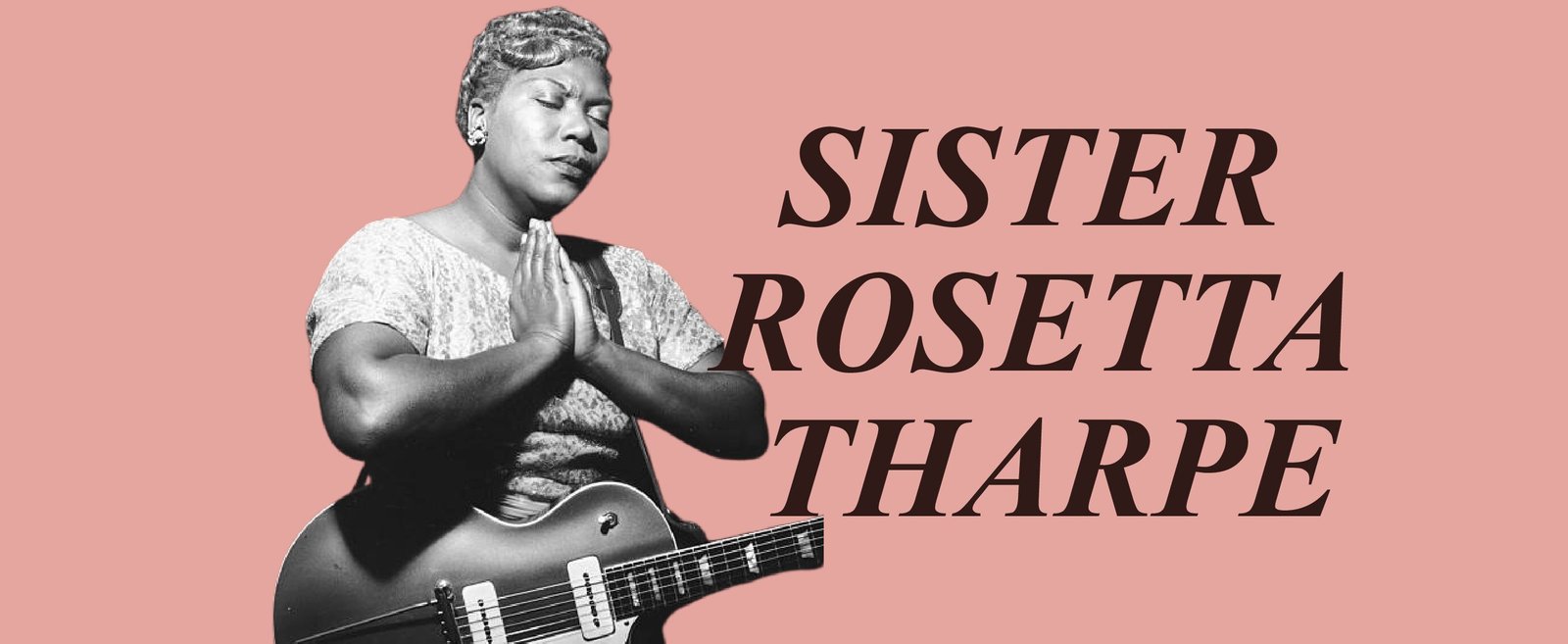
Before rock and roll had a name, Sister Rosetta Tharpe was already playing it.
Decades before the genre took hold of American culture, Tharpe was performing gospel songs with a driving guitar style that would go on to influence generations of musicians.
Born March 20, 1915, in Cotton Plant, Arkansas, Tharpe was raised in a deeply religious household. Her mother, Katie Bell Nubin, was a singer and evangelist in the Church of God in Christ, a Pentecostal denomination known for energetic, music-centered worship. According to an article published by Encyclopaedia Britannica, Tharpe began performing as a child and later moved to Chicago with her mother, where her musical style was shaped by the city’s growing jazz and blues scenes.
By the late 1930s, Tharpe had moved to New York City and began recording professionally. She performed at famed music venues like Harlem’s Cotton Club. Singles such as “Rock Me” established her as a pioneering performer who bridged gospel and popular music, according to the Rock & Roll Hall of Fame.
Throughout the 1940s, Tharpe toured widely, delivering performances that paired electric guitar with a dynamic stage presence. The Rock & Roll Hall of Fame calls her the “first guitar heroine of rock & roll,” a distinction that underscores her influence on the genre’s earliest sound.
Although her contributions were long overlooked in mainstream histories of rock music, Tharpe is now widely recognized as a foundational figure in its development. In 2018, she was inducted into the Rock & Roll Hall of Fame in the Early Influences category, cementing her legacy.Today, historians and musicians alike credit Sister Rosetta Tharpe as one of the first artists to fuse gospel with electrified guitar—an innovation that helped shape the sound of rock and roll. For more on her legacy, see Gayle F. Wald’s book, Shout, Sister, Shout!: The Untold Story of Rock-and-Roll Trailblazer Sister Rosetta Tharpe.