
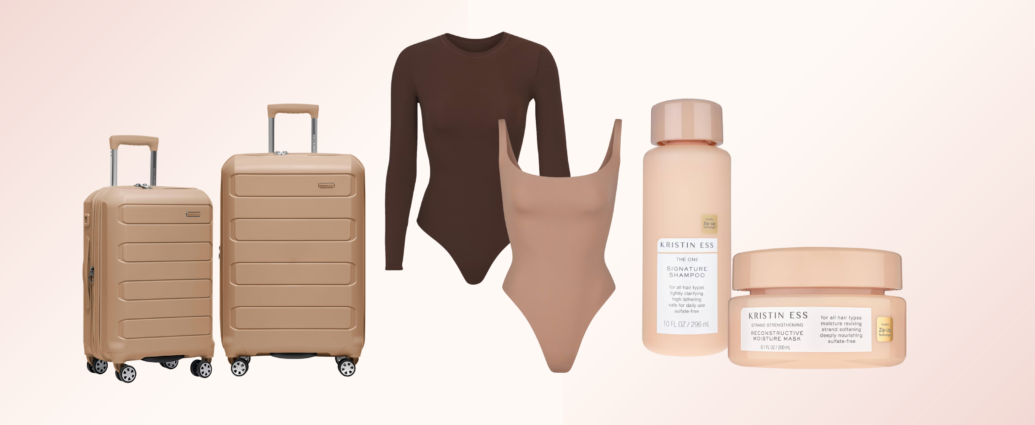
Look around your home: the oat-colored cookware, the blush shampoo bottle, the Trader Joe’s lip butter packaging. It’s hard not to notice: everything is nude.
Over the past few years, brands like Kylie Cosmetics and SKIMS have helped establish and normalize a muted palette of warm neutrals, tonal browns, and matte pastels. What began as a fashion identity—sand, clay, cocoa, blush—has migrated into everyday objects. When I was shopping for new luggage recently, it didn’t go unnoticed that the sand-colored set from Traveler’s Choice was the first to sell out.
Critics argue that this aesthetic sameness is flattening individuality. Scroll long enough, and it can feel like we all live in the same apartment.
But psychology suggests something more nuanced. Our attraction to cohesive beauty isn’t frivolous. Studies have found that people prefer colors associated with objects they already like. In other words, when buying a neutral-toned product, we like what it represents: quiet luxury, softness, and calm.
According to the Diderot Effect, a theory rooted in the writings of French philosopher Denis Diderot, a single aesthetic upgrade can trigger a cascade of purchases, as everything else in the home begins to feel out of sync. (I have a theory about Target capitalizing on this urge.)
Our desire for visually cohesive environments is also rooted in psychology. According to research, people who described their homes as cluttered showed higher cortisol levels throughout the day, while those with restorative homes had decreased depressed moods.
A beige pan won’t cure anxiety. But a visually coherent environment may reduce micro-stress and the cognitive load of constant sensory friction.
Yes, social media has accelerated sameness, and algorithm-friendly tones replicate quickly. But perhaps the spread of matte nudes isn’t just mimicry—it may reflect a collective desire for peace of mind and an elevated lifestyle.
In a world of push notifications and political volatility, muted objects can offer visual quiet. The risk, of course, is losing personal expression. When every home adopts the same tonal minimalism, individuality can fade into feed-approved neutrality.